Global Food Emulsifiers Market Growth, Size, Trends Analysis - By Product, By Application, By Source - Regional Outlook, Competitive Strategies and Segment Forecast to 2034
According to SPER Market Research, the Global Food Emulsifiers Market is estimated to reach USD 6.04 billion by 2034 with a CAGR of 4.55%.
Introduction and Overview
The report includes an in-depth analysis of the Global Food Emulsifiers Market, including market size and trends, product mix, Applications, and supplier analysis.
The global Food Emulsifiers Market was valued at USD 3.7 billion in 2024, and it is expected to rise at a 4.55% CAGR from 2025 to 2034. The market includes rising demand for processed and convenience foods, growth of the bakery, confectionery, and dairy sectors, and increasing consumer preference for appealing texture and stability in food products. Clean-label, plant-based, and low-fat product trends further boost adoption of natural emulsifiers. Expansion of the foodservice industry, technological advancements in formulation, and the need for extended shelf-life also support market growth, particularly in rapidly urbanizing and emerging economies.
By Product Insights
In 2024, mono- and diglycerides, along with their derivatives, dominated the market because of their extensive functional benefits in food formulations. They serve as efficient emulsifiers that combine ingredients that typically separate, enhancing texture and product quality. With shifting lifestyles and rapid urbanization, consumers are increasingly opting for convenience foods. These products rely on emulsifiers to achieve better texture, improved stability, and longer shelf life, which has significantly increased the demand for mono- and diglycerides in the food industry.
By Application Insights
In 2024, the bakery and confectionery segment held the largest market share, driven by a growing focus on indulgence and premium product offerings. Emulsifiers play a vital role in enhancing the sensory qualities of baked goods and confectionery items, including mouthfeel, smoothness, and overall consumer appeal. As demand for distinctive flavors and textures in sweet products rises, manufacturers are increasingly incorporating emulsifiers to deliver superior quality and meet evolving consumer expectations.
By Source Insights
In 2024, the animal segment held the highest share of market revenue, supported by the distinctive functional properties of animal-based emulsifiers that enhance texture and stability in food products. For example, egg yolk lecithin is commonly utilized in bakery applications because it boosts dough elasticity and prolongs shelf life. These performance advantages have led food manufacturers to increasingly favor animal-derived emulsifiers.
Regional Insights
The North America food emulsifiers market is expected to experience strong growth during the forecast period. Rising interest in clean-label and organic food products is a key factor supporting this expansion. As consumers pay closer attention to ingredient transparency, demand is increasing for emulsifiers that are naturally sourced and meet clean-label standards. This move toward healthier, more natural product formulations is encouraging manufacturers to adopt emulsifiers that better align with the preferences of the region’s health-focused consumers.
Market Competitive Landscape
The food emulsifiers market is competitive, with global and regional players focusing on product innovation, clean-label solutions, and strategic partnerships to strengthen market presence. Companies invest in R&D to develop natural, multifunctional emulsifiers that cater to evolving consumer preferences. Expansion through mergers, acquisitions, and geographic diversification is common, particularly in emerging markets. Key players also emphasize sustainability and cost efficiency to gain an edge. Intense competition drives continuous improvement in product performance, application versatility, and customization for bakery, dairy, and processed food manufacturers.
Recent Developments:
• In August 2024, Palsgaard increased its food emulsifier production capacity by opening a new facility in Malaysia. With an annual output of 20,000 metric tons, the plant highlights the company’s commitment to addressing the rising demand for emulsifiers, especially within the Asia-Pacific food industry.
• Scope of the report:
Report Metric Details
Market size available for the years 2021-2034
Base year considered 2024
Forecast Period 2025-2034
Segments Covered By Product, By Application, By Source
Regions Covered North America, Latin America, Asia-Pacific, Europe, and Middle East & Africa
Companies Covered Cargill, Incorporated, Palsgaard, Ingredion
Ricken Vitamin CO., LTD., Corbion, ADM, Kerry Group, BASF SE, DuPont
Key Topics Covered in the Report
• Global Food Emulsifiers Market Size (FY’2021-FY’2034)
• Overview of Global Food Emulsifiers Market
• Segmentation of Global Food Emulsifiers Market By Product (Mono, Di-Glycerides & Derivatives, Lecithin, Stearoyl Lactylates, Sorbitan Esters, Others)
• Segmentation of Global Food Emulsifiers Market By Application (Bakery & Confectionery, Convenience Foods, Meat Products, Dairy Products, Others)
• Segmentation of Global Food Emulsifiers Market By Source (Animal, Plant)
• Statistical Snap of Global Food Emulsifiers Market
• Expansion Analysis of Global Food Emulsifiers Market
• Problems and Obstacles in Global Food Emulsifiers Market
• Competitive Landscape in the Global Food Emulsifiers Market
• Details on Current Investment in Global Food Emulsifiers Market
• Competitive Analysis of Global Food Emulsifiers Market
• Prominent Players in the Global Food Emulsifiers Market
• SWOT Analysis of Global Food Emulsifiers Market
• Global Food Emulsifiers Market Future Outlook and Projections (FY’2025-FY’2034)
• Recommendations from Analyst
Global Food Emulsifiers Market Size- By Product, By Application, By Source- Regional Outlook, Competitive Strategies and Segment Forecast to 2034
1. Introduction
1.1. Scope of the report
1.2. Market segment analysis
2. Research Methodology
2.1. Research data source
2.1.1. Secondary Data
2.1.2. Primary Data
2.1.3. SPER’s internal database
2.1.4. Premium insight from KOL’s
2.2. Market size estimation
2.2.1. Top-down and Bottom-up approach
2.3. Data triangulation
3. Executive Summary
4. Market Dynamics
4.1. Driver, Restraint, Opportunity and Challenges analysis
4.1.1. Drivers
4.1.2. Restraints
4.1.3. Opportunities
4.1.4. Challenges
5. Market variable and outlook
5.1. SWOT Analysis
5.1.1. Strengths
5.1.2. Weaknesses
5.1.3. Opportunities
5.1.4. Threats
5.2. PESTEL Analysis
5.2.1. Political Landscape
5.2.2. Economic Landscape
5.2.3. Social Landscape
5.2.4. Technological Landscape
5.2.5. Environmental Landscape
5.2.6. Legal Landscape
5.3. PORTER’s Five Forces
5.3.1. Bargaining power of suppliers
5.3.2. Bargaining power of buyers
5.3.3. Threat of Substitute
5.3.4. Threat of new entrant
5.3.5. Competitive rivalry
5.4. Heat Map Analysis
6. Competitive Landscape
6.1. Global Food Emulsifiers Market Manufacturing Base Distribution, Sales Area, Product Type
6.2. Mergers & Acquisitions, Partnerships, Product Launch, and Collaboration in Global Food Emulsifiers Market
7. Global Food Emulsifiers Market, By Product (USD Million) 2021-2034
7.1. Mono, Di-Glycerides & Derivatives
7.2. Lecithin
7.3. Stearoyl Lactylates
7.4. Sorbitan Esters
7.5. Others
8. Global Food Emulsifiers Market, By Application (USD Million) 2021-2034
8.1. Bakery & Confectionery
8.2. Convenience Foods
8.3. Meat Products
8.4. Dairy Products
8.5. Others
9. Global Food Emulsifiers Market, By Source (USD Million) 2021-2034
9.1. Animal
9.2. Plant
10. Global Food Emulsifiers Market, (USD Million) 2021-2034
10.1. Global Food Emulsifiers Market Size and Market Share
11. Global Food Emulsifiers Market, By Region, (USD Million) 2021-2034
11.1. Asia-Pacific
11.1.1. Australia
11.1.2. China
11.1.3. India
11.1.4. Japan
11.1.5. South Korea
11.1.6. Rest of Asia-Pacific
11.2. Europe
11.2.1. France
11.2.2. Germany
11.2.3. Italy
11.2.4. Spain
11.2.5. United Kingdom
11.2.6. Rest of Europe
11.3. Middle East and Africa
11.3.1. Kingdom of Saudi Arabia
11.3.2. United Arab Emirates
11.3.3. Qatar
11.3.4. South Africa
11.3.5. Egypt
11.3.6. Morocco
11.3.7. Nigeria
11.3.8. Rest of Middle-East and Africa
11.4. North America
11.4.1. Canada
11.4.2. Mexico
11.4.3. United States
11.5. Latin America
11.5.1. Argentina
11.5.2. Brazil
11.5.3. Rest of Latin America
12. Company Profile
12.1. Cargill, Incorporated.
12.1.1. Company details
12.1.2. Financial outlook
12.1.3. Product summary
12.1.4. Recent developments
12.2. Palsgaard
12.2.1. Company details
12.2.2. Financial outlook
12.2.3. Product summary
12.2.4. Recent developments
12.3. Ingredion
12.3.1. Company details
12.3.2. Financial outlook
12.3.3. Product summary
12.3.4. Recent developments
12.4. Ricken Vitamin CO., LTD.
12.4.1. Company details
12.4.2. Financial outlook
12.4.3. Product summary
12.4.4. Recent developments
12.5. Corbion
12.5.1. Company details
12.5.2. Financial outlook
12.5.3. Product summary
12.5.4. Recent developments
12.6. ADM
12.6.1. Company details
12.6.2. Financial outlook
12.6.3. Product summary
12.6.4. Recent developments
12.7. Kerry Group
12.7.1. Company details
12.7.2. Financial outlook
12.7.3. Product summary
12.7.4. Recent developments
12.8. BASF SE
12.8.1. Company details
12.8.2. Financial outlook
12.8.3. Product summary
12.8.4. Recent developments
12.9. DuPont
12.9.1. Company details
12.9.2. Financial outlook
12.9.3. Product summary
12.9.4. Recent developments
12.10. Others
13. Conclusion
14. List of Abbreviations
15. Reference Links
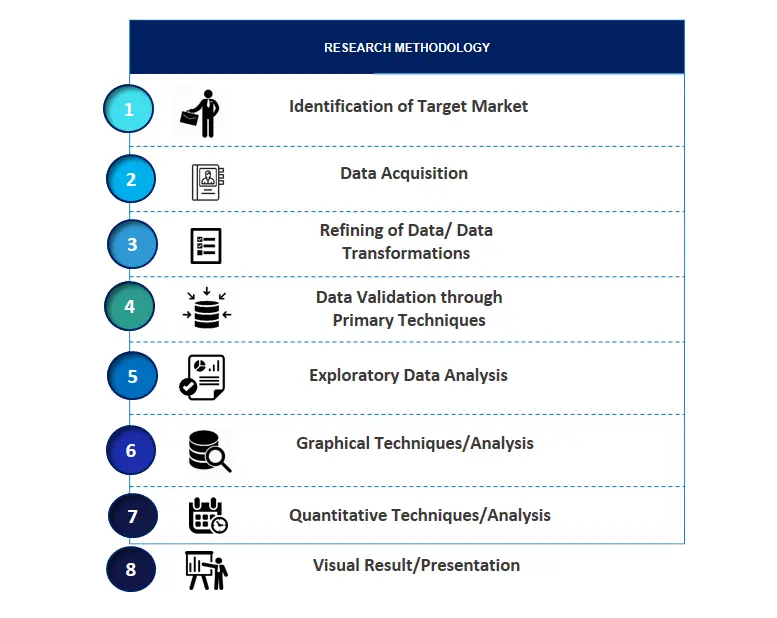
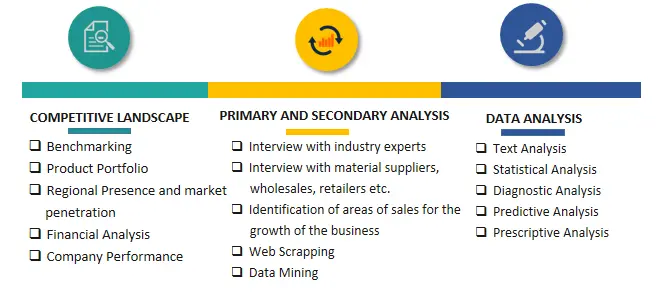
SPER Market Research’s methodology uses great emphasis on primary research to ensure that the market intelligence insights are up to date, reliable and accurate. Primary interviews are done with players involved in each phase of a supply chain to analyze the market forecasting. The secondary research method is used to help you fully understand how the future markets and the spending patterns look likes.
The report is based on in-depth qualitative and quantitative analysis of the Product Market. The quantitative analysis involves the application of various projection and sampling techniques. The qualitative analysis involves primary interviews, surveys, and vendor briefings. The data gathered as a result of these processes are validated through experts opinion. Our research methodology entails an ideal mixture of primary and secondary initiatives.